









Packing for a rave should take ten minutes. The mistakes that ruin a night are usually boring ones: the bag that is too big for security, the phone that dies before the ride home, the empty water bottle that is not actually allowed, or the cold walk back to camp in clothes meant for the afternoon.
The right list depends on where you are going. A club night, an arena show, a one day outdoor event and a camping festival do not need the same bag. Start with the event rules, check the forecast, then bring the few things you will actually use.
Read the event rules before you pack
Bag sizes, hydration packs, reusable bottles, medicine, chains, masks, cameras and outside food are handled differently from one event to the next. A clear bag that worked last month can still be rejected at another gate.
Open the official event page and read the allowed and prohibited lists. Check again on the day you leave. If a rule is vague, contact the venue instead of betting your night on an old social post.
Insomniac's current general guidelines are a useful example: permitted bags must meet specific size and compartment limits, hydration packs must enter empty, and the exact policy can still change by event. Your event's own page is the final word.
The short packing list
- Your ticket, a physical photo ID, one card and a little backup cash
- Your phone, a short charging cable, a compact battery and a small dry pouch if rain is possible
- High fidelity earplugs in a case you can reach quickly
- An empty reusable bottle or hydration pack, if the event allows it
- A secure bag that meets the published size rules
- Any medicine you need, packed exactly as the venue requires
- Broken in shoes, breathable socks and one blister bandage
- A light layer or warm layer chosen for the actual forecast
- Sunscreen and sunglasses for daytime events
- Tissues or wipes, hand sanitizer and any personal care items you need
- Your ride plan, meeting point and emergency contact saved offline
That is enough for many events. Add to it only when the venue, weather or length of the trip gives you a reason.


Pack for the event you are attending
Club or warehouse
Keep the bag small. You will spend most of the night in a crowded room, and there may be no comfortable place to carry a bulky hoodie. Bring your ID, phone, payment method and earplugs. Check the coat check before taking a heavy layer.
Some warehouse events share the exact address close to doors. Save the address, ticket and ride details as soon as they arrive. Do not assume you will have a signal outside or inside.
Arena show or touring EDM event
Arena security can be stricter than a club. Read the venue bag policy as well as the promoter's event page. Many arenas limit bag dimensions and professional camera equipment. A compact battery, earplugs and an approved empty bottle cover most of what you need once you are through the gate.
One day outdoor event
Add sun protection, water capacity and a layer for the temperature after dark. Check the hourly forecast instead of relying on the daily high. Rain in the forecast calls for a real poncho or shell, not a pashmina or jersey.
Camping festival
Separate what stays at camp from what goes into the venue. Keep a headlamp, replacement clothes, dry socks, a proper rain layer, toiletries, a first aid kit and your heaviest cold weather gear at camp. Seal one complete dry outfit away from rain and dust. You do not need to carry the whole campsite into the venue.
Before you leave camp, take a photo or screenshot of your campsite location. Save the festival map and schedule offline. Choose a meeting point with your group that does not depend on phone service.
If you are heading to a multi day bass festival, the Lost Lands guide goes deeper on early arrival, weather swings and camping layers.
Do not wear new shoes
A rave is a bad place to discover that your shoes rub. Wear a closed, cushioned pair that has already survived a full day on your feet. Platforms are fine if you have actually walked in them for hours. Open toes are a rough choice in a dense crowd.
Breathable socks matter more than they sound. Carry one blister bandage, and add anti chafe protection if your outfit or the weather makes rubbing likely. Test the complete outfit at home: walk, sit, lift your arms and dance in it before you trust it for the night.
Bring earplugs and put them in early
Hearing protection belongs on the basic list, not the emergency list. The National Institute on Deafness and Other Communication Disorders places concerts around 94 to 110 decibels and recommends hearing protection for loud recreational sound.
High fidelity earplugs lower the volume without muffling the music as heavily as basic foam plugs. Keep them in a case attached to your bag or keys. Put them in before you reach the loudest part of the room. A spare pair is worth carrying if you are going with someone who always forgets theirs.
Plan for water before you reach the gate
Do not assume every bottle or hydration pack will be accepted. Check the rules for size, material and compartments, then bring it empty if required. Find the refill stations on the map before the day begins.
Drink regularly, especially in heat, but do not treat more water as the answer to every problem. If you or a friend becomes confused, faints, vomits repeatedly, has trouble breathing or cannot cool down, get event medical staff. Do not leave someone alone because they are embarrassed or worried about getting in trouble.
Small things that earn the space
Pack wipes, hand sanitizer, lip balm and any period products or personal care items you know you may need.
For outdoor events, consider sunglasses, a hat, a bandana or an allowed folding fan. Check the rules before bringing a misting bottle.
A small resealable pouch keeps your phone, ID, charger and medicine together when the weather turns.
Keep your phone, ID and ride home secure
A phone in a loose back pocket is easy to lose in a crowd. Use a zipped front pocket, a crossbody bag worn close to the body, or another closure you can feel. If the bag sits behind you, move it forward in dense areas. Keep one card and a little backup cash somewhere secure instead of putting every way home in one pocket.
Save your ticket, ride details, hotel or campsite location, festival map and one emergency contact offline. Write the phone number of someone in your group on a small card in case your phone disappears.
Pick a meeting point when you arrive. Make it specific and permanent, such as the left side of a named art piece or a numbered gate. A moving food vendor or the front of a stage is not a meeting point.
Dress for the weather you will have later
The temperature at doors is not the temperature during the walk back. Outdoor events can move from direct sun to wind, rain and cold after dark.
A pashmina works as a light shoulder layer, some coverage from daytime sun, or a break from wind on the way between stages. It is not rain gear and it does not replace a sweatshirt when the forecast is genuinely cold.
A heavyweight hoodie is better for a cold night, but it takes up more room. Keep it at camp, in the car or in a locker until you need it. If rain is possible, keep the hoodie dry and carry a shell or poncho that is made for rain.
For more on how those layers work, read the rave pashmina guide. If you are still deciding what to wear underneath them, use the rave outfit guide.

What to wear, and what to carry
An artist jersey is easy to wear for a long day and works over a fitted rave outfit when the temperature changes. A pashmina gives you a compact layer without hiding the rest of the look. Kandi, small trinkets and artist pins are optional. Bring them because you want to trade or wear them, not because you think there is a required uniform. Use locking backs if a pin is going into the crowd.
 Artist jerseyGhengar Inferno.exe Baseball JerseyView the jersey
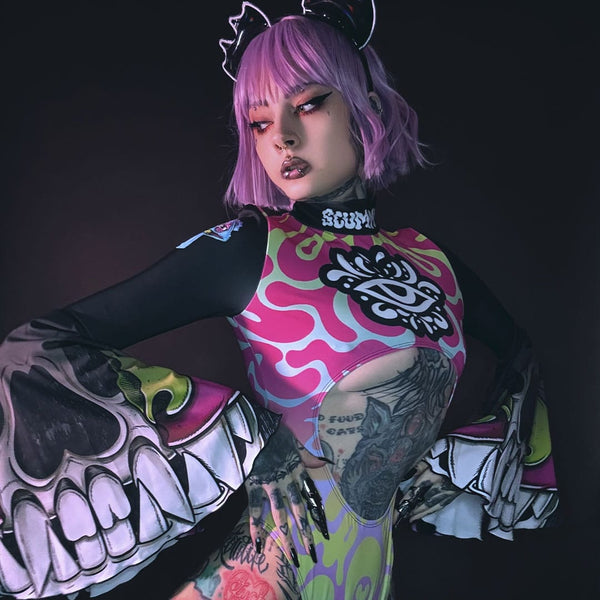
 Rave outfitMuShY Metal Bell Sleeve BodysuitView the bodysuit
 PashminaKompany Cybernetics PashminaView the pashmina
 AccessoriesCollectible PinsBrowse Collectible Pins
Browse more rave jerseys, womens rave outfits, rave pashminas, collectible pins and official artist merchandise.
Medicine, consent and looking out for people
Bring medicine in the packaging required by the event. Many venues want prescription medicine in its original labeled container and limit the amount you can carry. Do not rely on a photo of your ID or prescription unless the official policy says it is accepted.
Know where the medical tent or venue staff are before anyone needs them. DanceSafe publishes current health and harm reduction resources for music and nightlife communities. Some promoters also permit sealed intranasal naloxone, but you still need to check the policy for your event.
Respect does not need a slogan. Ask before touching someone or taking their photo. Give people room to move. If somebody looks lost or unwell, ask if they need help and bring in staff when the situation is beyond you.
What to leave at home
Leave anything that is banned, difficult to secure, or too sentimental to lose. Common problems include oversized bags, glass containers, large camera gear, outside drinks, aerosol cans, sharp accessories and long chains. Chairs, inflatables, totems and flow props may be allowed at one festival and refused at the next.
Do not bring an outfit piece that you have not tested. If it rubs, slips, snags or blocks your bag at home, it will be worse after several hours in a crowd.
Before you leave
Most of this is boring on purpose. A charged phone, earplugs, a water plan, a secure pocket and the right layer will do more for your night than a bag full of things you never touch.
Open the event rules one last time. Check the hourly forecast. Put the earplugs where you can reach them. Save the ticket, map and ride details offline. Tell your group where to meet if the phones stop working.
Once those things are handled, stop packing and go.
Browse the Festival Shop or shop official artist merchandise.